GCC States Renewable Energy Data and Outlook 2026

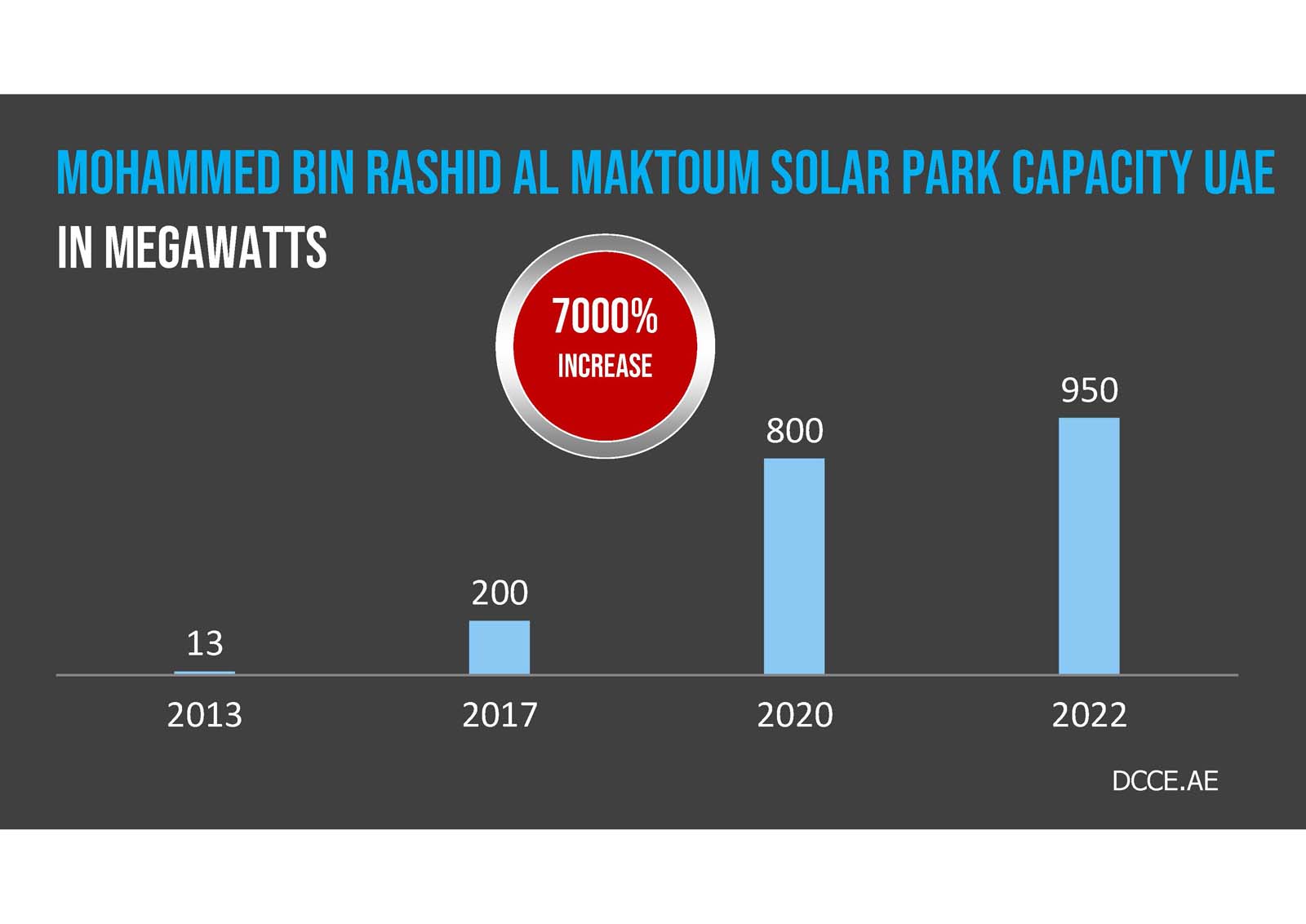
January 2026 – This slideshow gives an overview of the Gulf Cooperation Council (GCC) member countries’ progress in renewable energy and carbon dioxide emissions. It offers analyses of the current data and future outlook for renewable energy in the region as of 2026. Key findings reveal significant increases in carbon dioxide emissions from Qatar, the Kingdom of Saudi Arabia (KSA), and the United Arab Emirates (UAE) since 1970, with increases ranging from 600% in Qatar to 1,200% in Saudi Arabia. This slideshow also talks about emissions from making electricity. It shows that CO₂ emissions are rising quickly across the GCC, with Saudi Arabia’s emissions from this sector rising by 25% over time. It also addresses energy consumption patterns by sector, showing that a significant portion of emissions originates from electricity generation. The anticipated transition to renewable energy is underscored, with predictions indicating substantial savings in fuel and emissions by 2030—specifically, an 800% increase in both when utilizing renewable sources. The installed renewable energy capacity across the GCC has shown a marked increase from 2014 to 2023, with the UAE leading in installed renewable energy output in megawatts, projecting to reach 3,058 MW by 2030. Additionally, the report emphasizes the growing share of renewable energy in the total energy mix, with ambitious targets set for each GCC country by 2030. There have been significant investments in renewable energy, detailing a significant investment increase in the sector, along with projections that solar and other renewable capacities are expected to experience dramatic increases over the next decade. Specific case studies, such as the Mohammed bin Rashid Al Maktoum solar park in the UAE, illustrate the scale of investment and the potential for substantial output, projecting a 7,000% increase in capacity. This comprehensive analysis highlights the challenges faced by GCC states: advancing urban, infrastructure, and industrial developments and addressing rising emissions while transitioning toward a sustainable energy future through renewable initiatives.

Gulf Cooperation Council
Renewable energy GCC
climate change GCC
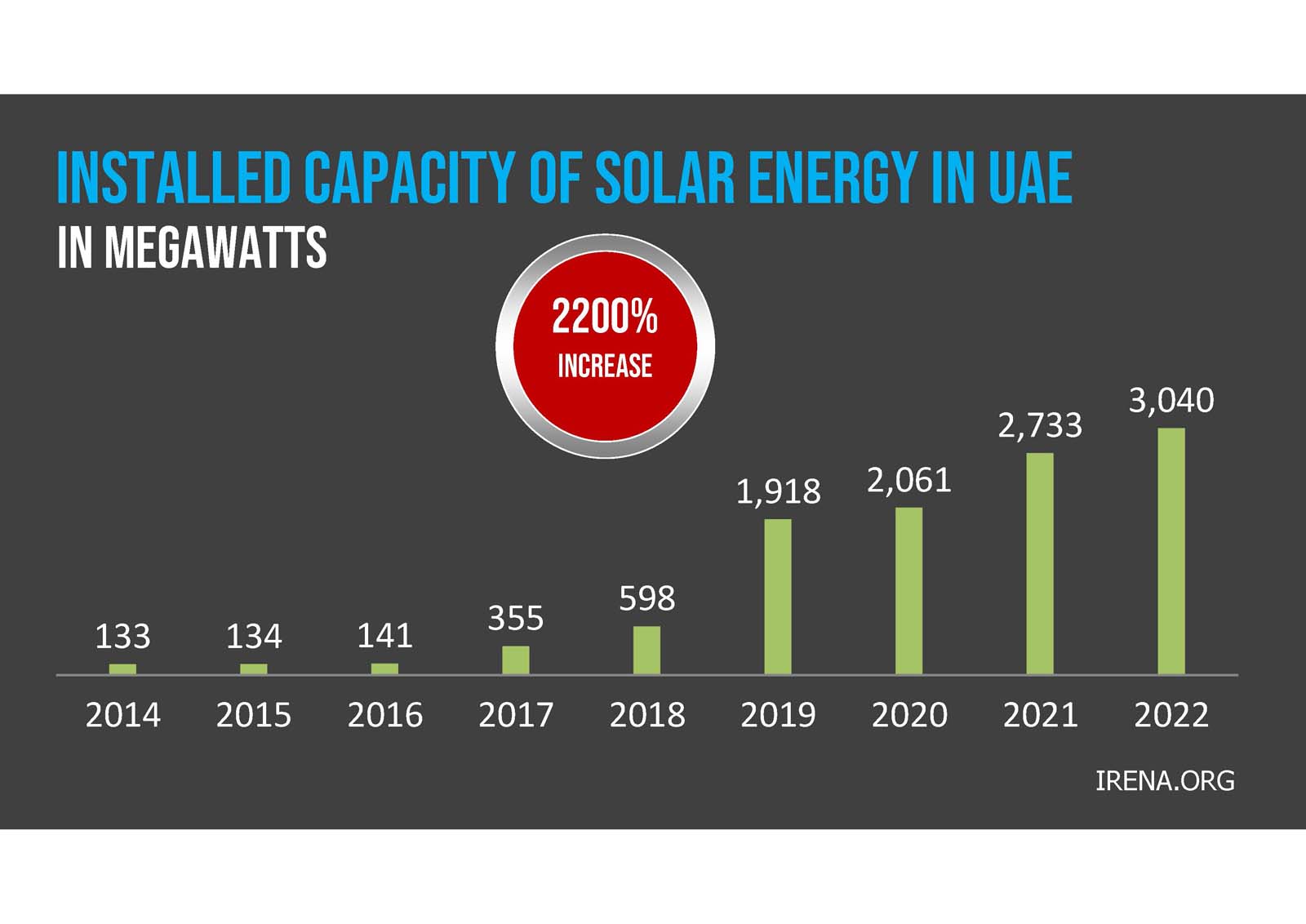
Bar chart showing UAE's installed solar energy capacity in megawatts from 2014 to 2022, rising from 133 MW to 3,040 MW, with a 2200% increase highlighted.
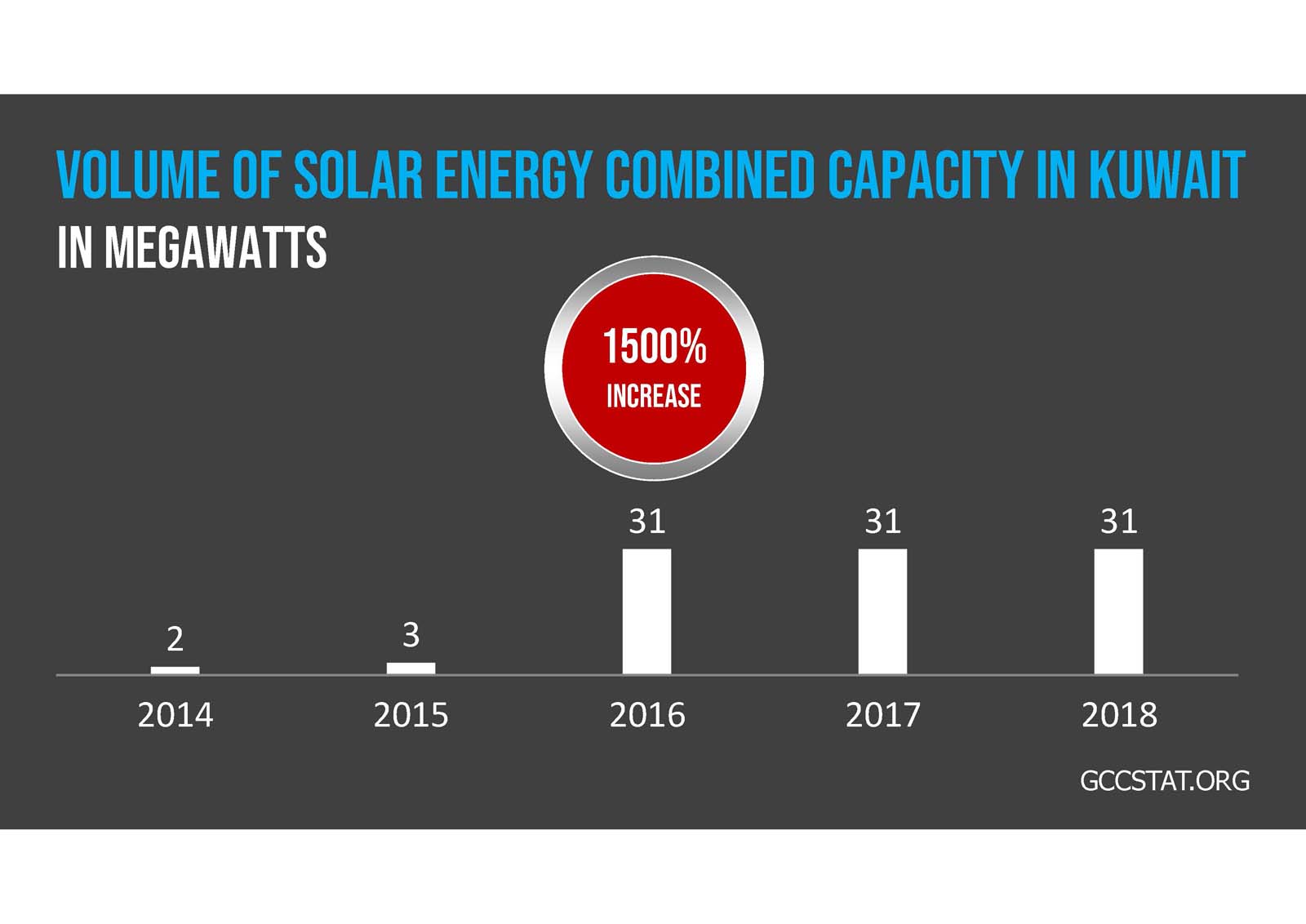
Bar chart showing solar energy capacity in Kuwait: 2 MW in 2014, 3 MW in 2015, 31 MW from 2016 to 2018, with a 1500% increase in 2016.
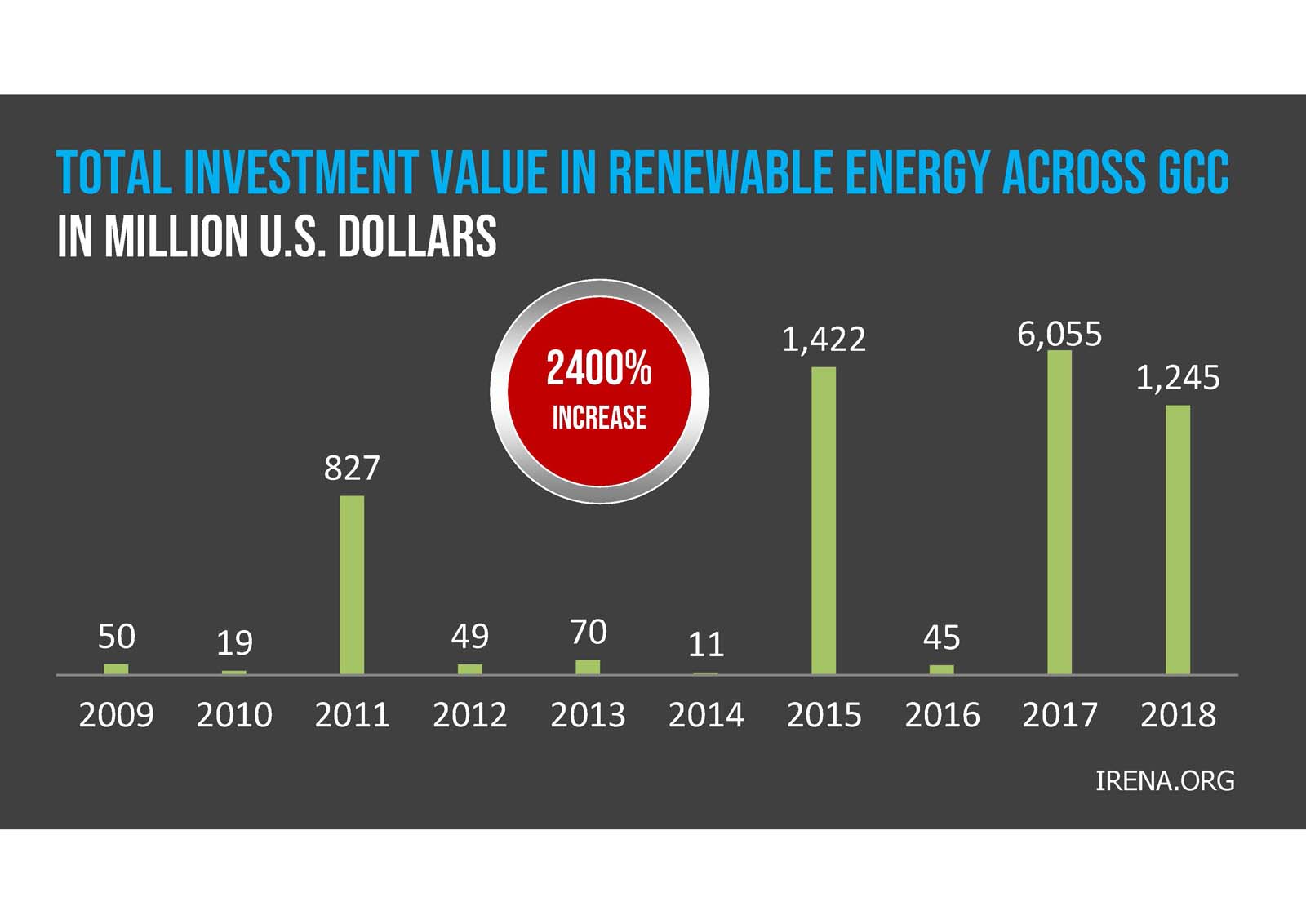
Bar graph showing total renewable energy investment in GCC from 2009 to 2018, with a peak of $6,055 million in 2017 and a noted 2400% increase over the period.
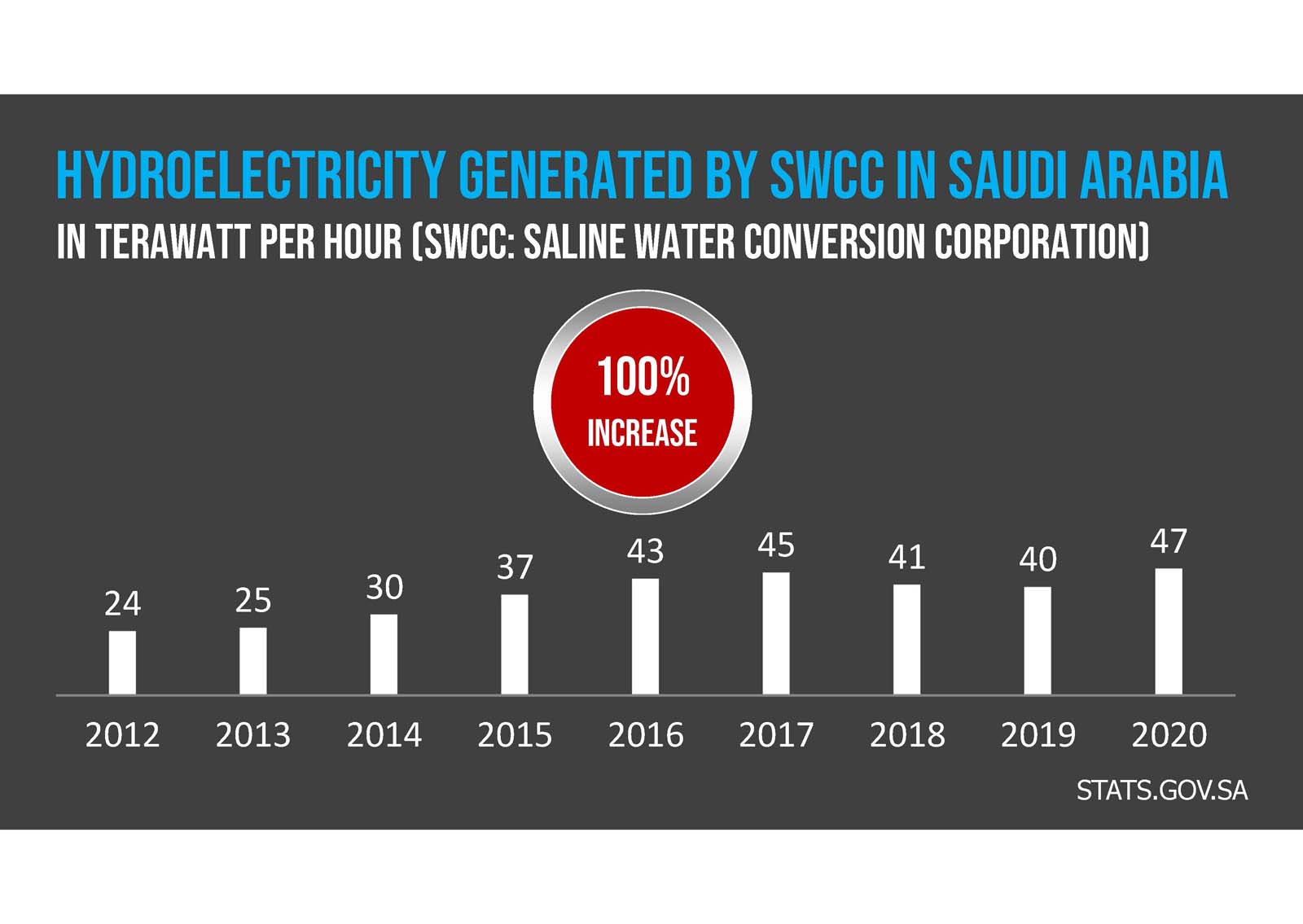
Bar chart showing hydroelectricity generated by SWCC in Saudi Arabia from 2012 to 2020, increasing from 24 TWh in 2012 to 47 TWh in 2020, with a 100% increase highlighted.
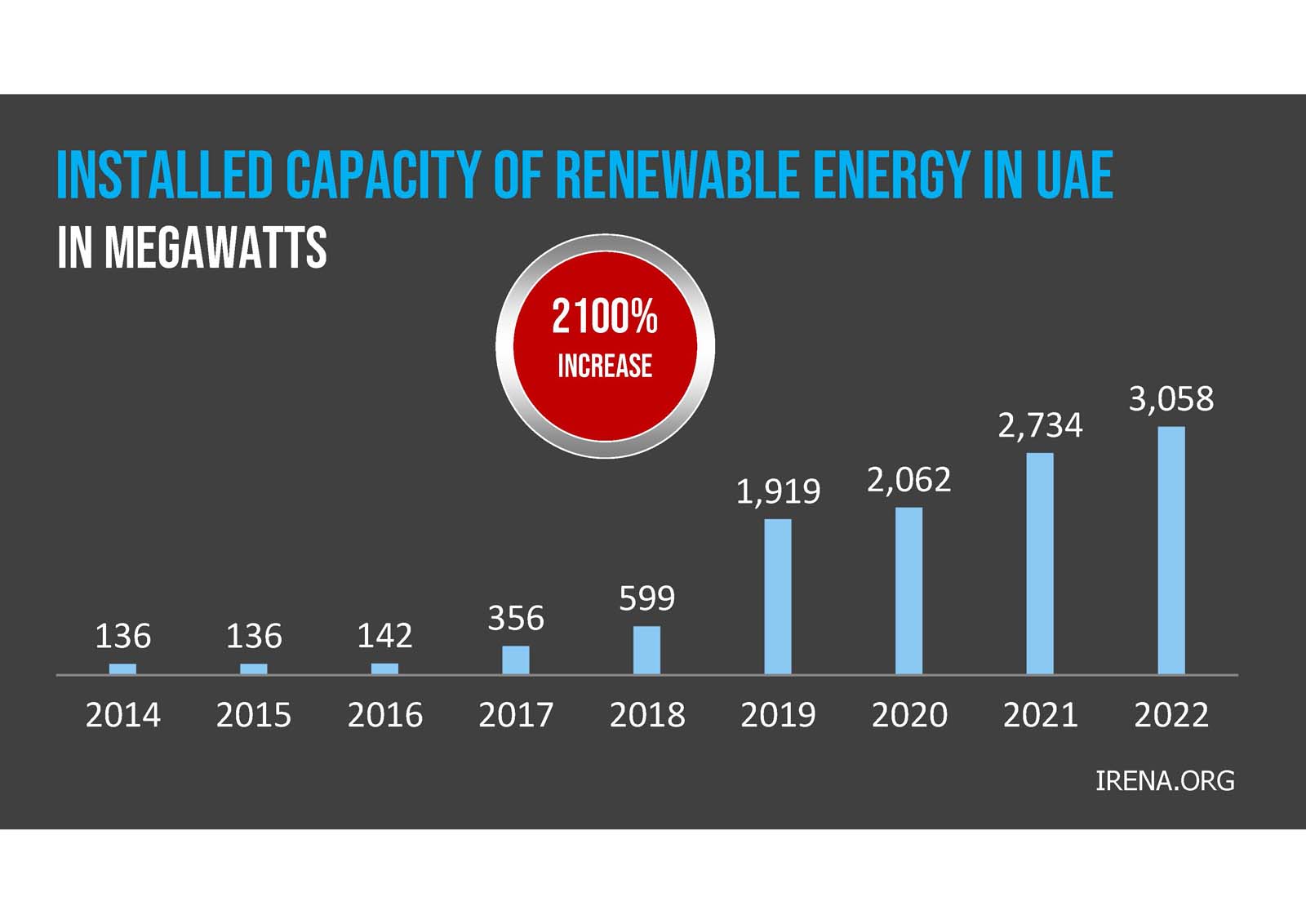
Bar chart showing the increase in installed renewable energy capacity in UAE from 136 MW in 2014 to 3,058 MW in 2022, indicating a 2100% growth.
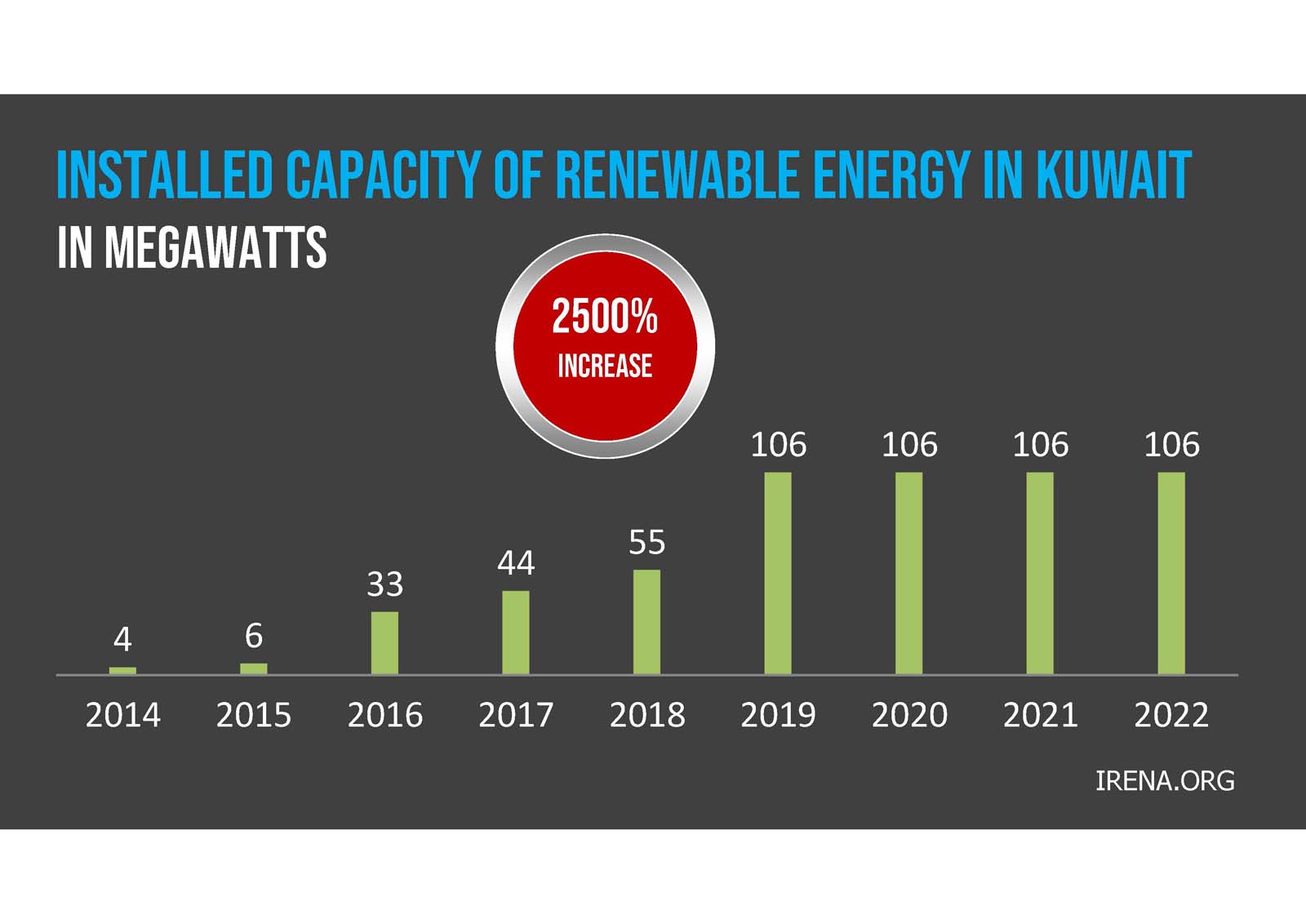
Bar chart showing Kuwait's installed renewable energy capacity in megawatts from 2014 to 2022, rising from 4 MW in 2014 to 106 MW in 2019 and remaining stable through 2022.
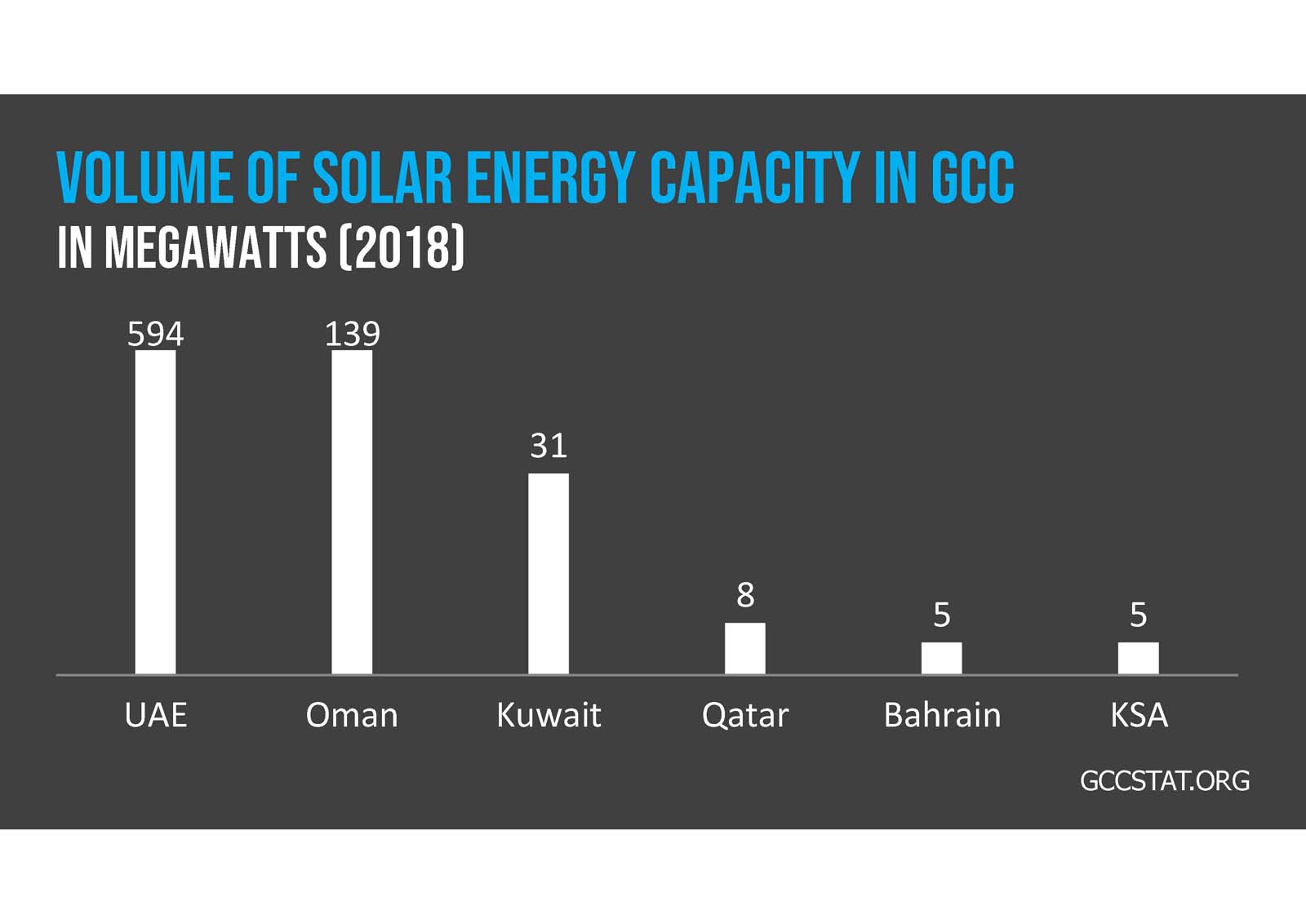
Bar chart showing solar energy capacity in GCC countries (2018): UAE 594 MW, Oman 139 MW, Kuwait 31 MW, Qatar 8 MW, Bahrain 5 MW, KSA 5 MW.
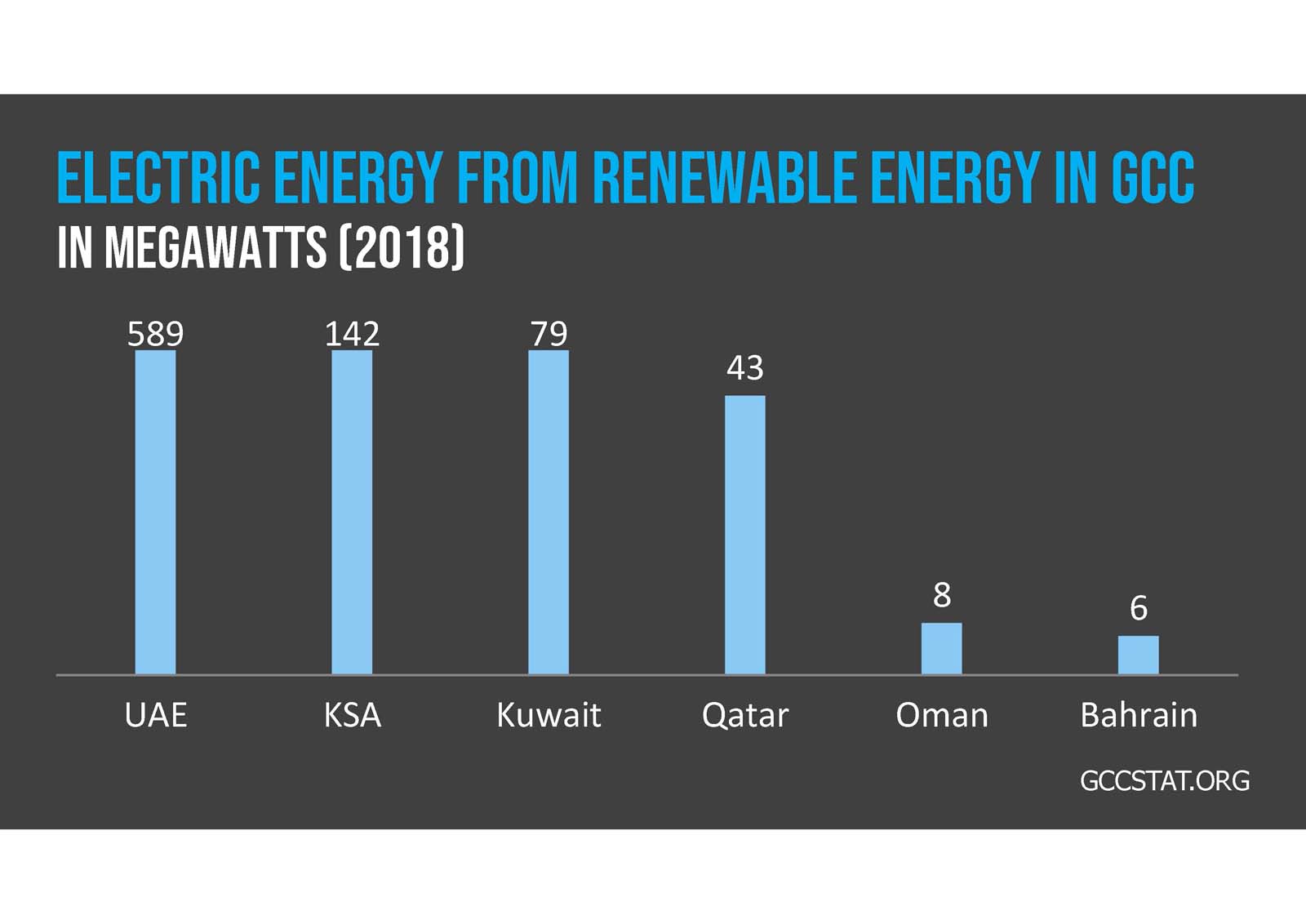
Bar chart showing electric energy from renewable sources in GCC countries (2018): UAE 589 MW, KSA 142 MW, Kuwait 79 MW, Qatar 43 MW, Oman 8 MW, Bahrain 6 MW.
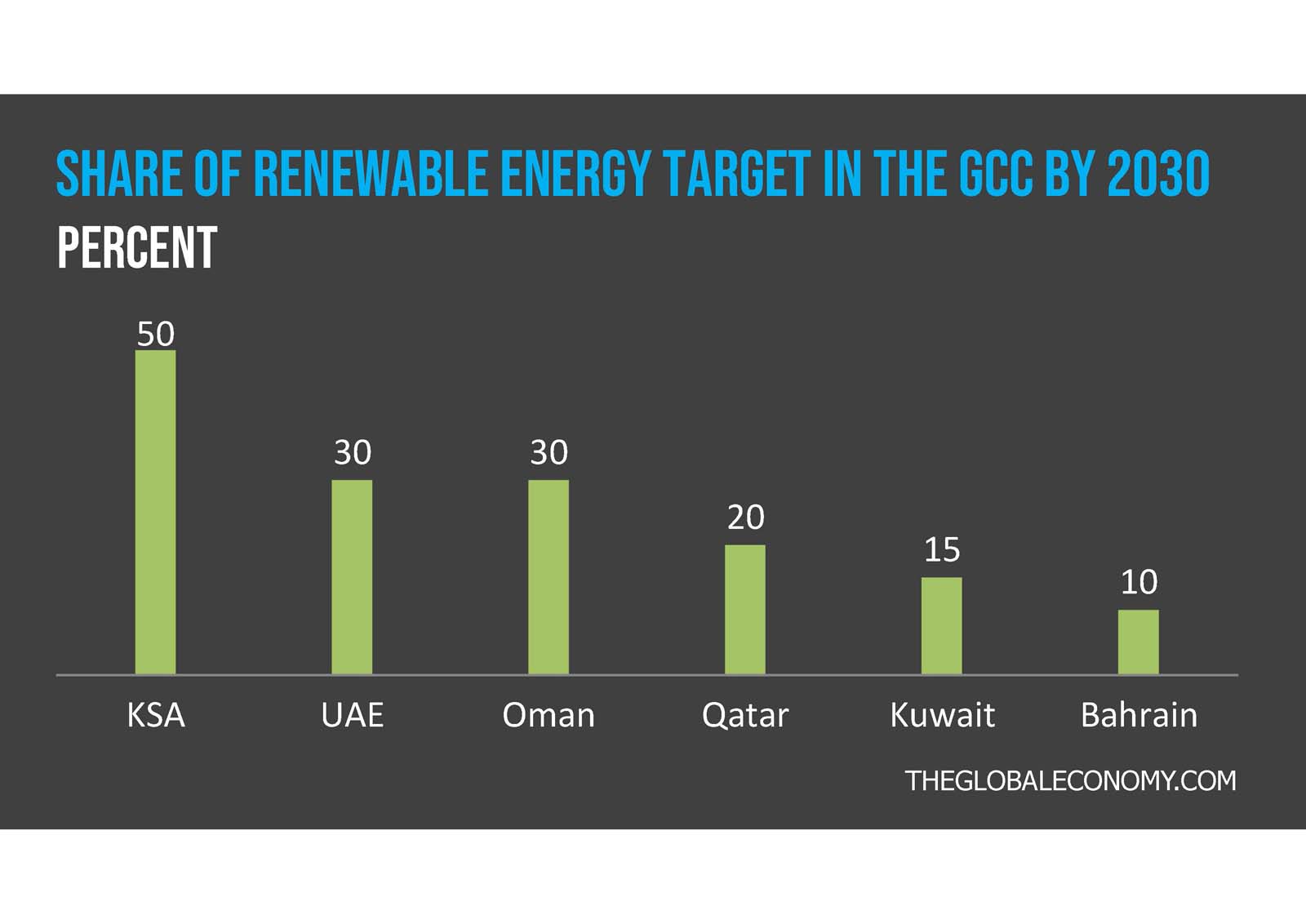
Bar chart showing 2030 renewable energy targets for GCC countries: KSA 50%, UAE 30%, Oman 30%, Qatar 20%, Kuwait 15%, Bahrain 10%.
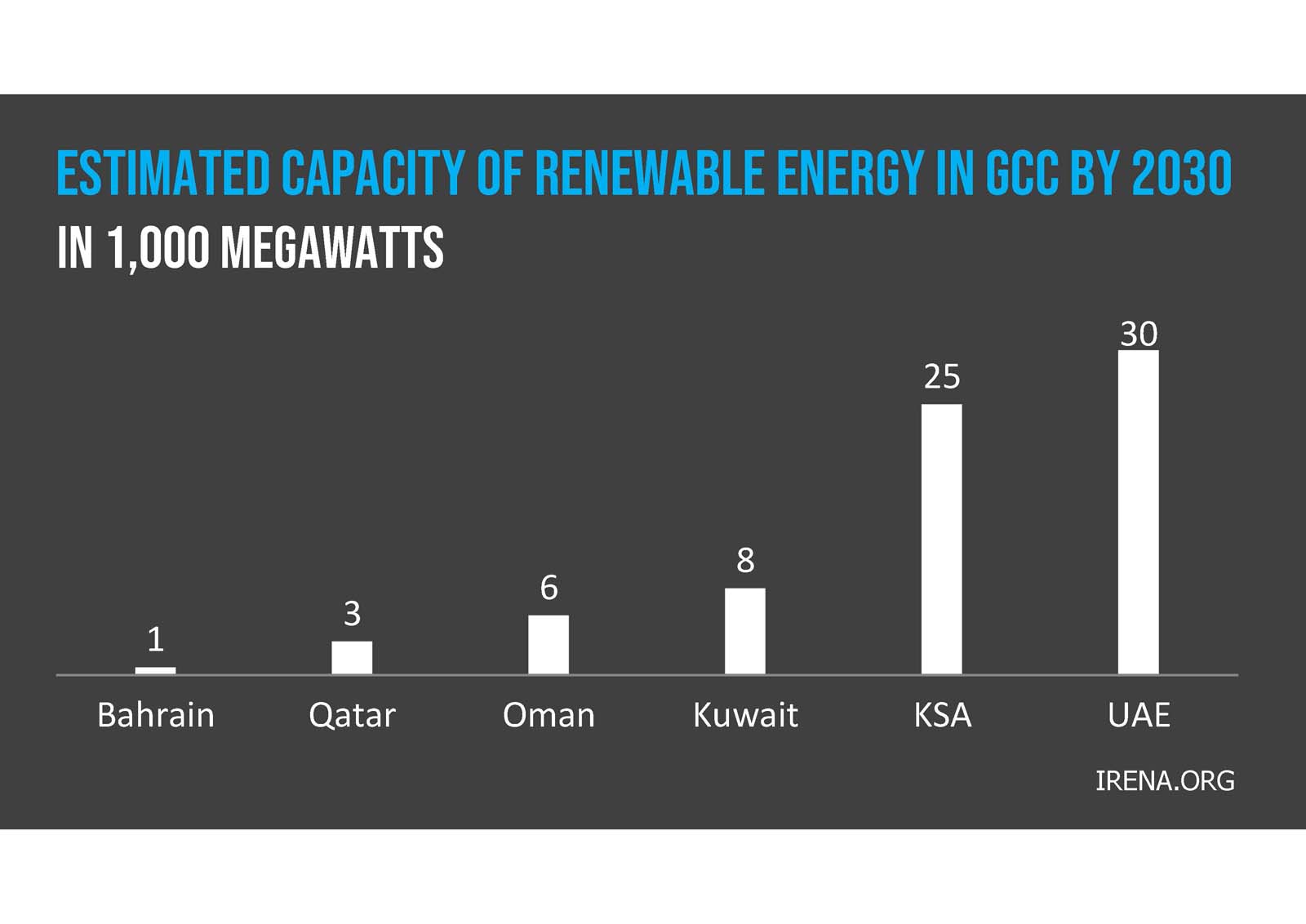
Bar chart showing estimated renewable energy capacity in GCC by 2030: Bahrain 1, Qatar 3, Oman 6, Kuwait 8, KSA 25, UAE 30 (in 1,000 megawatts).
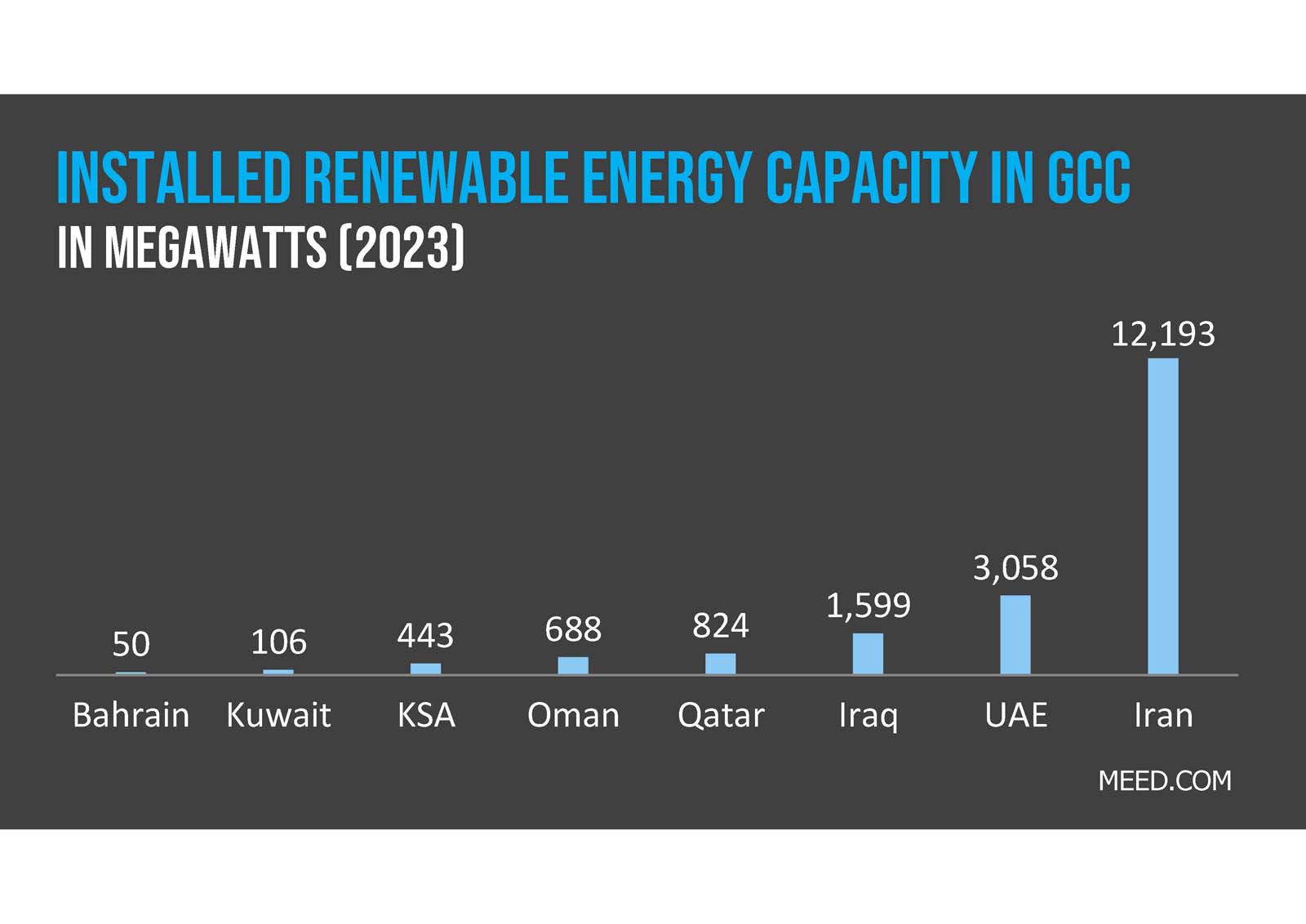
Bar chart showing installed renewable energy capacity in 2023 for GCC countries; Iran leads with 12,193 MW, followed by UAE (3,058 MW), others have less than 2,000 MW.
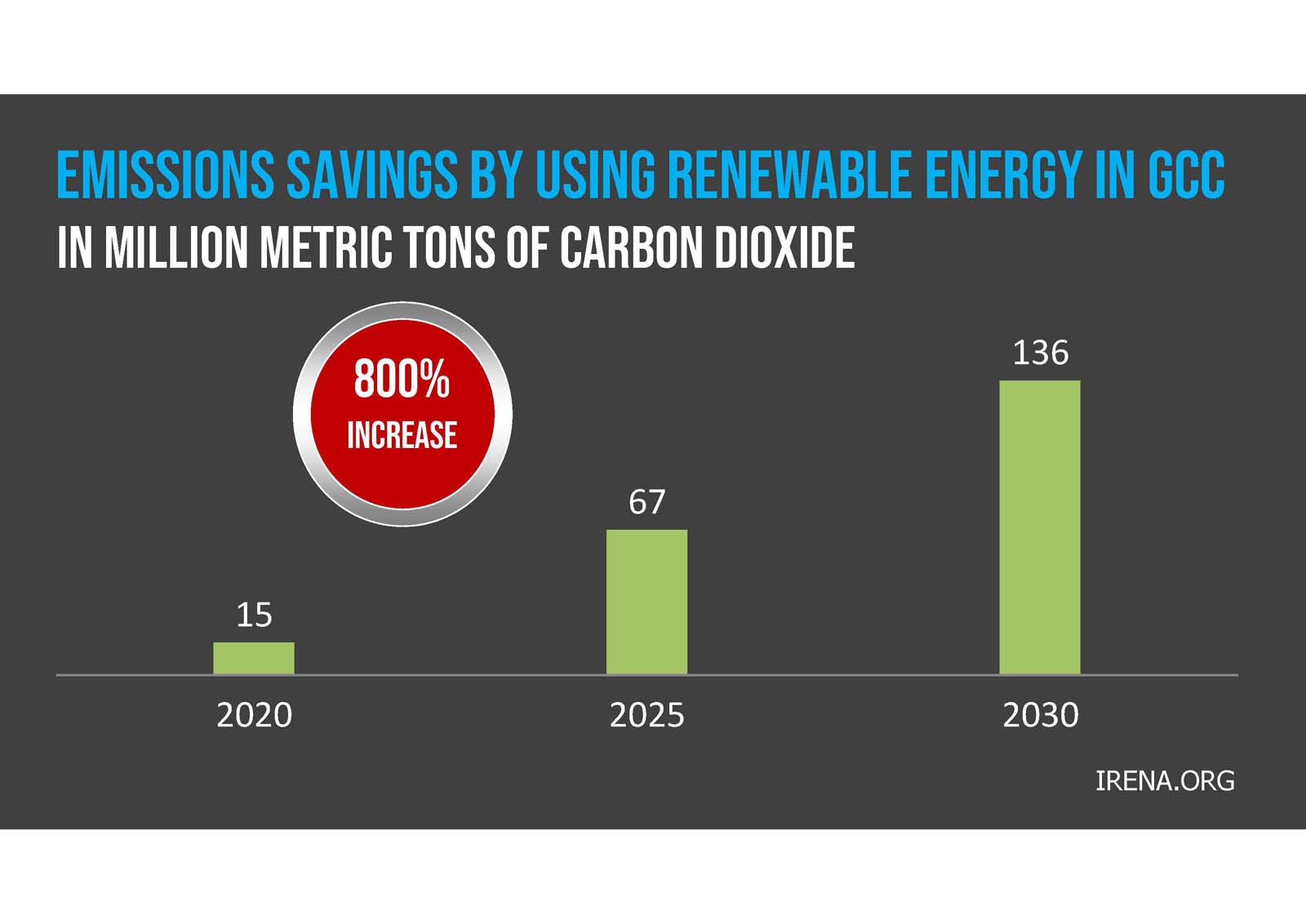
Bar graph showing emissions savings in GCC from using renewable energy: 15 million metric tons CO₂ in 2020, 67 in 2025, and 136 in 2030, with an 800% increase noted.
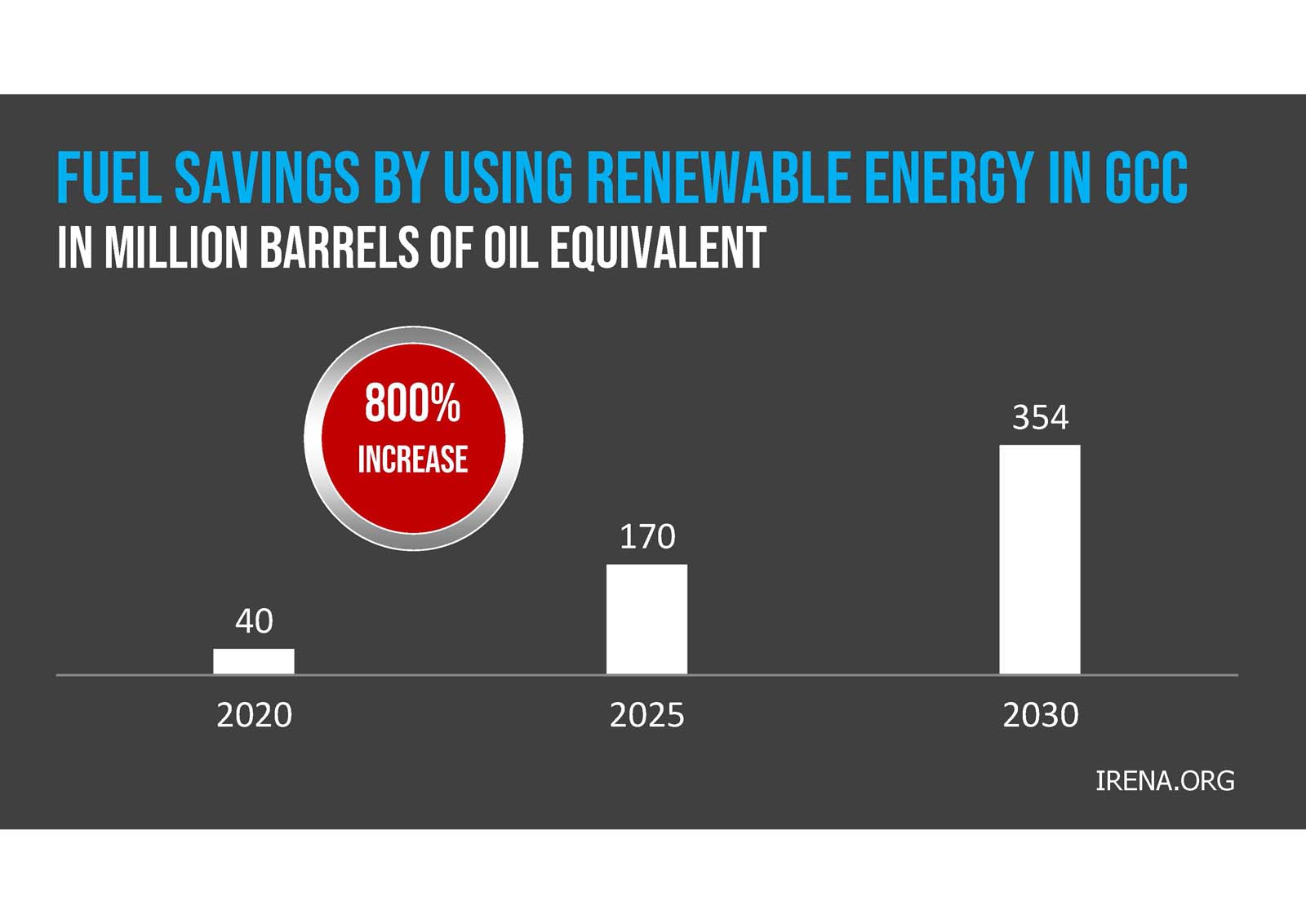
Bar chart showing fuel savings in the GCC from using renewable energy: 40 million barrels in 2020, 170 in 2025, and 354 in 2030; highlighting an 800% increase.
A graphic with the text “Renewable Energy Gulf Corporation Council GCC” on a dark gray background, with "Renewable Energy" highlighted in blue.
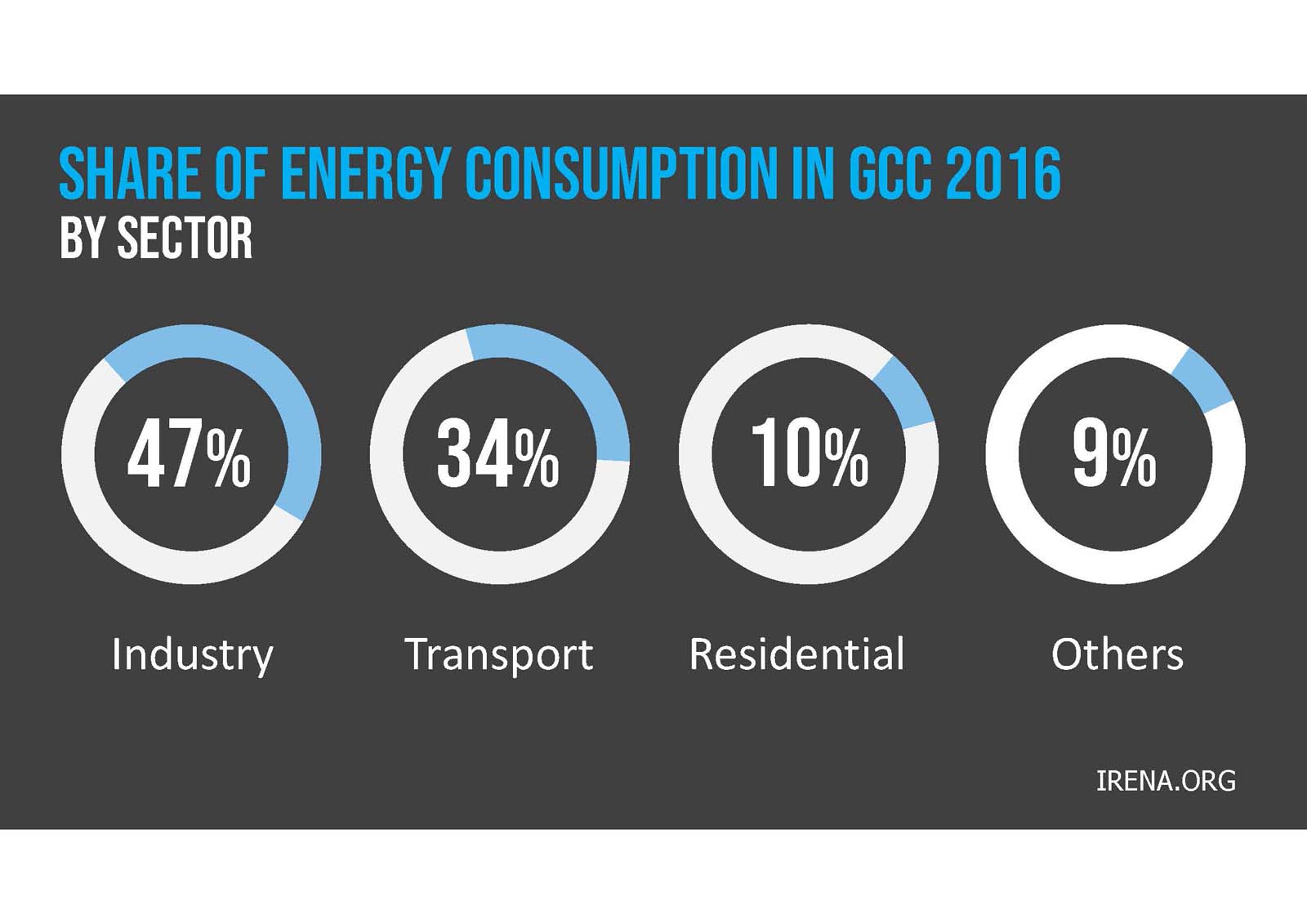
Infographic showing 2016 GCC energy consumption: Industry 47%, Transport 34%, Residential 10%, Others 9%. Source: IRENA.
Text reads: "Energy Consumption Gulf Corporation Council GCC" in blue and white letters on a dark background.
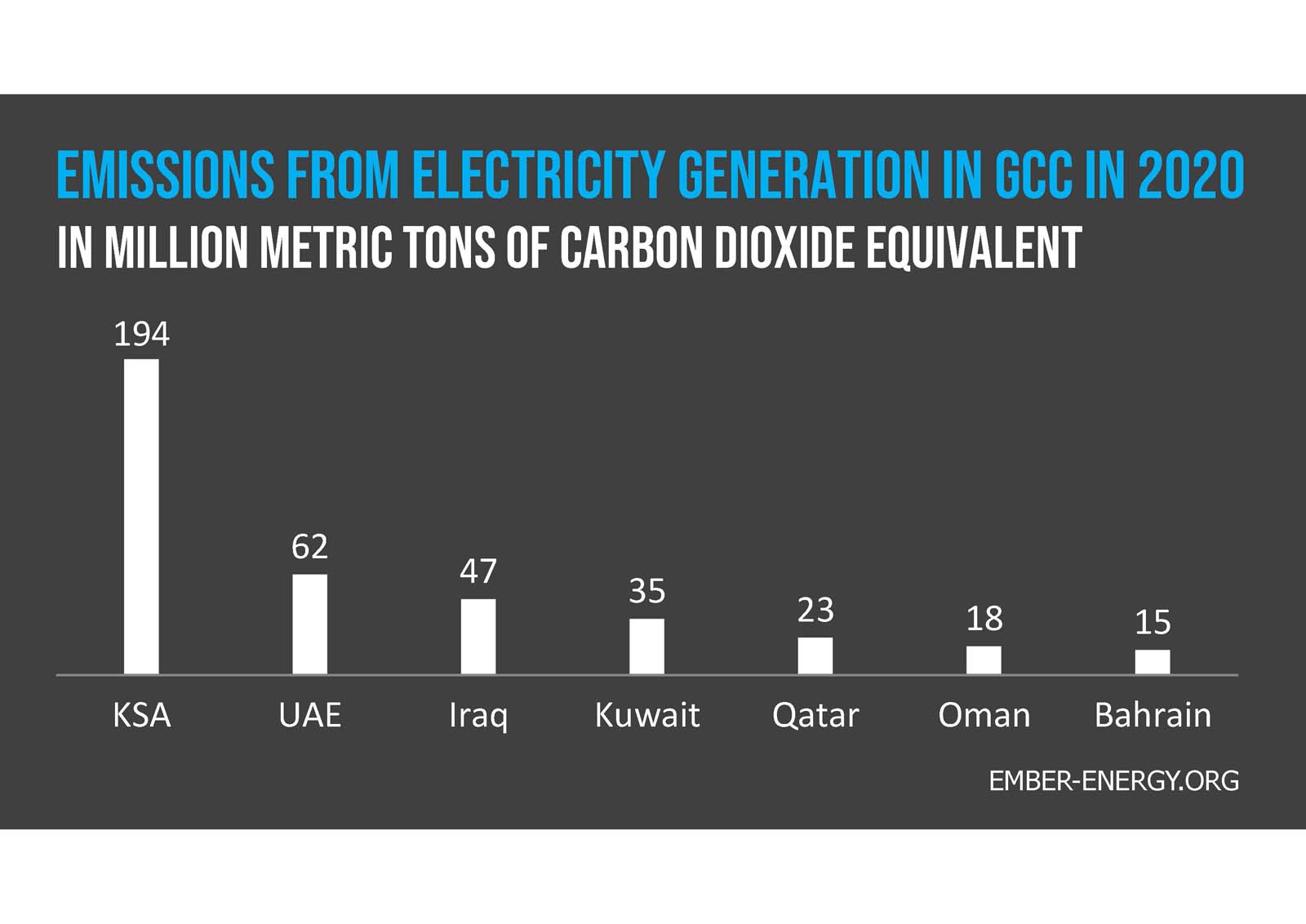
Bar chart showing 2020 electricity generation emissions in the GCC; KSA leads with 194 MtCO2e, followed by UAE (62), Iraq (47), Kuwait (35), Qatar (23), Oman (18), and Bahrain (15).
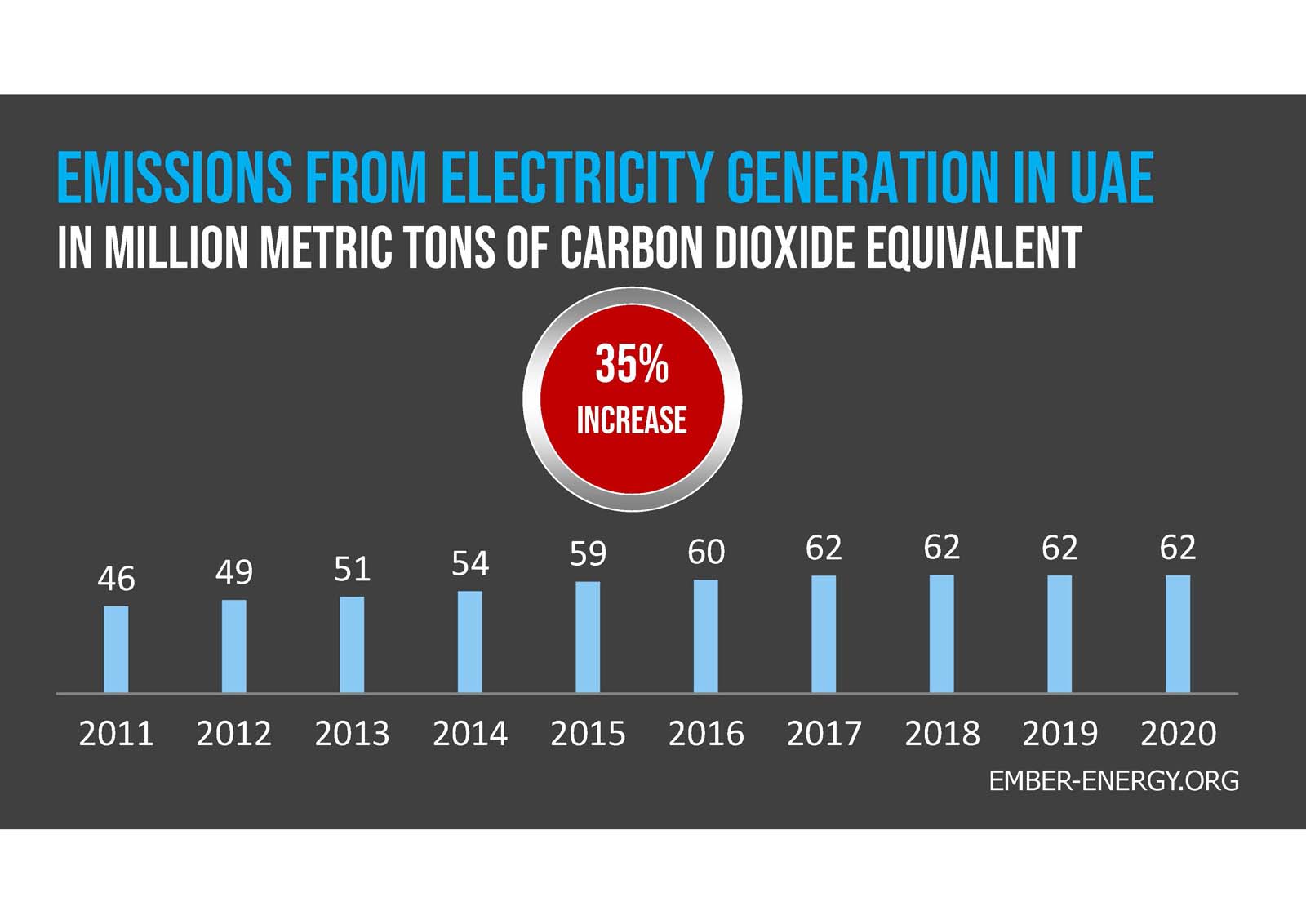
Bar chart showing UAE electricity generation emissions increasing from 46 million metric tons in 2011 to 62 million in 2020, with a noted 35% increase over the period.
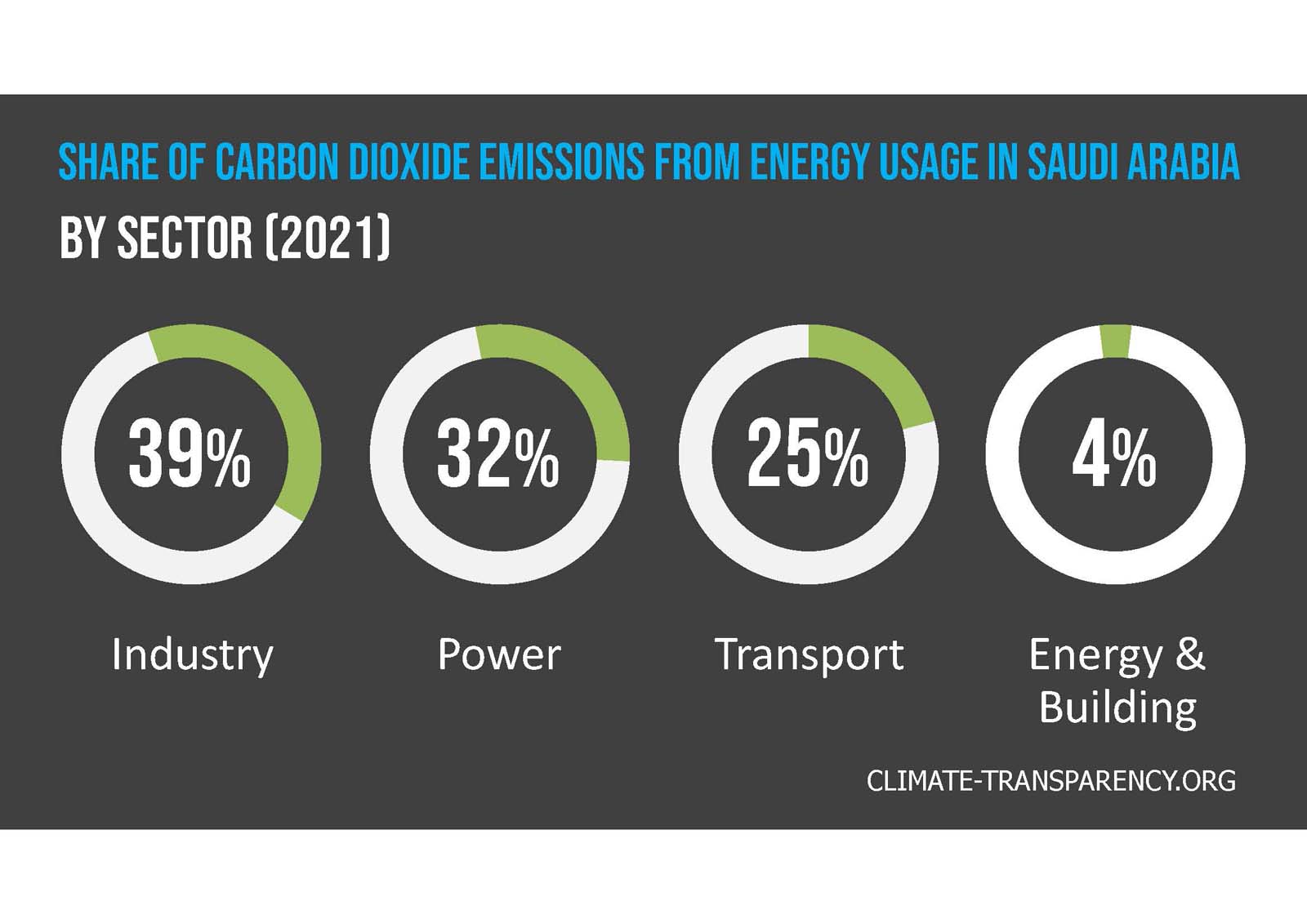
Infographic showing the share of carbon dioxide emissions by sector in Saudi Arabia for 2021: Industry 39%, Power 32%, Transport 25%, and Energy & Building 4%.
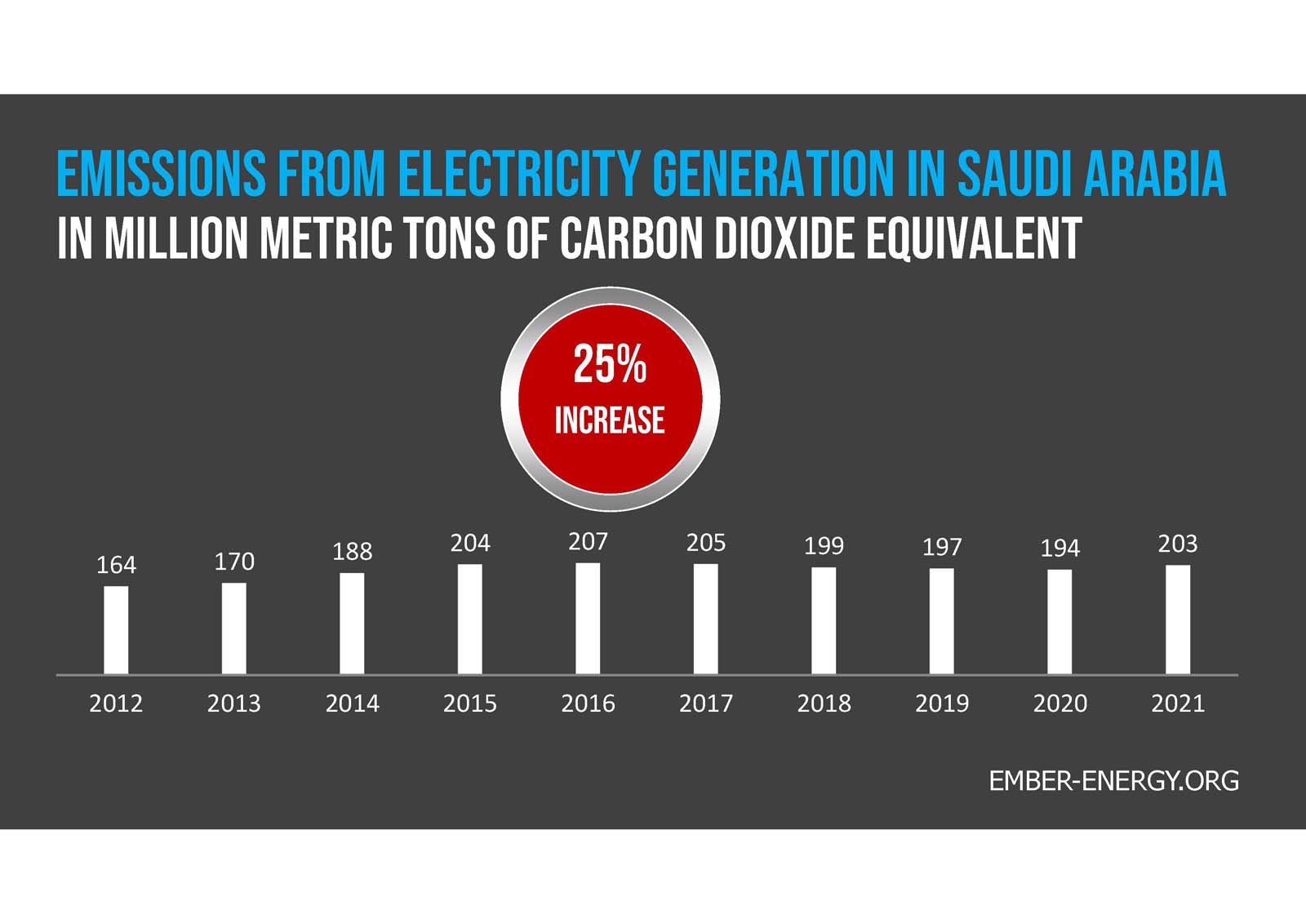
Bar graph showing Saudi Arabia’s electricity generation emissions from 2012 to 2021, peaking at 207 million metric tons in 2016, with a 25% increase noted; source: ember-energy.org.
A graphic with the text "Emissions from Electricity Gulf Corporation Council GCC" on a dark background.
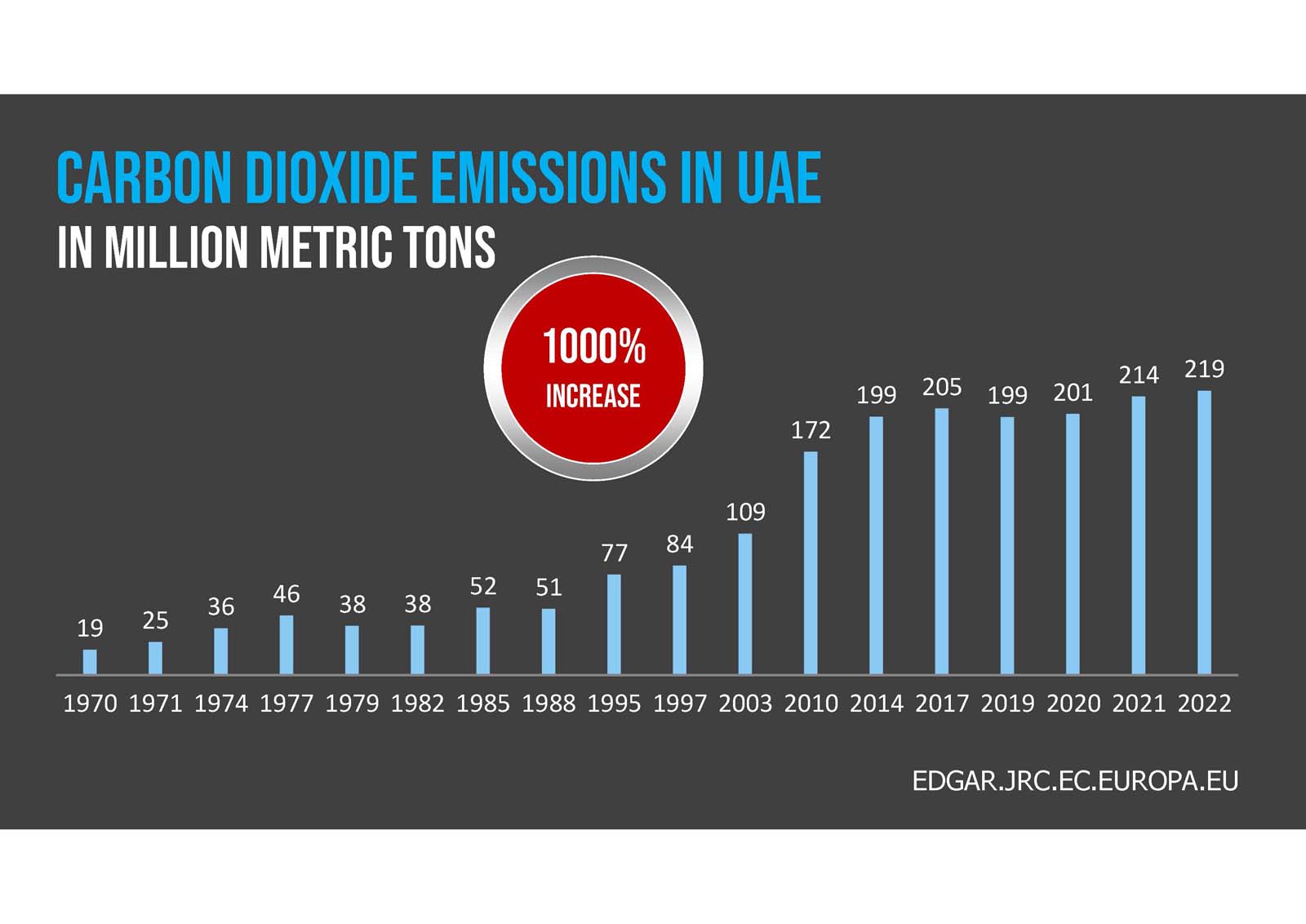
Bar chart showing UAE carbon dioxide emissions from 1970 to 2022, increasing from 19 to 219 million metric tons with a 1000% increase highlighted. Source: EDGAR.JRC.EC.EUROPA.EU.
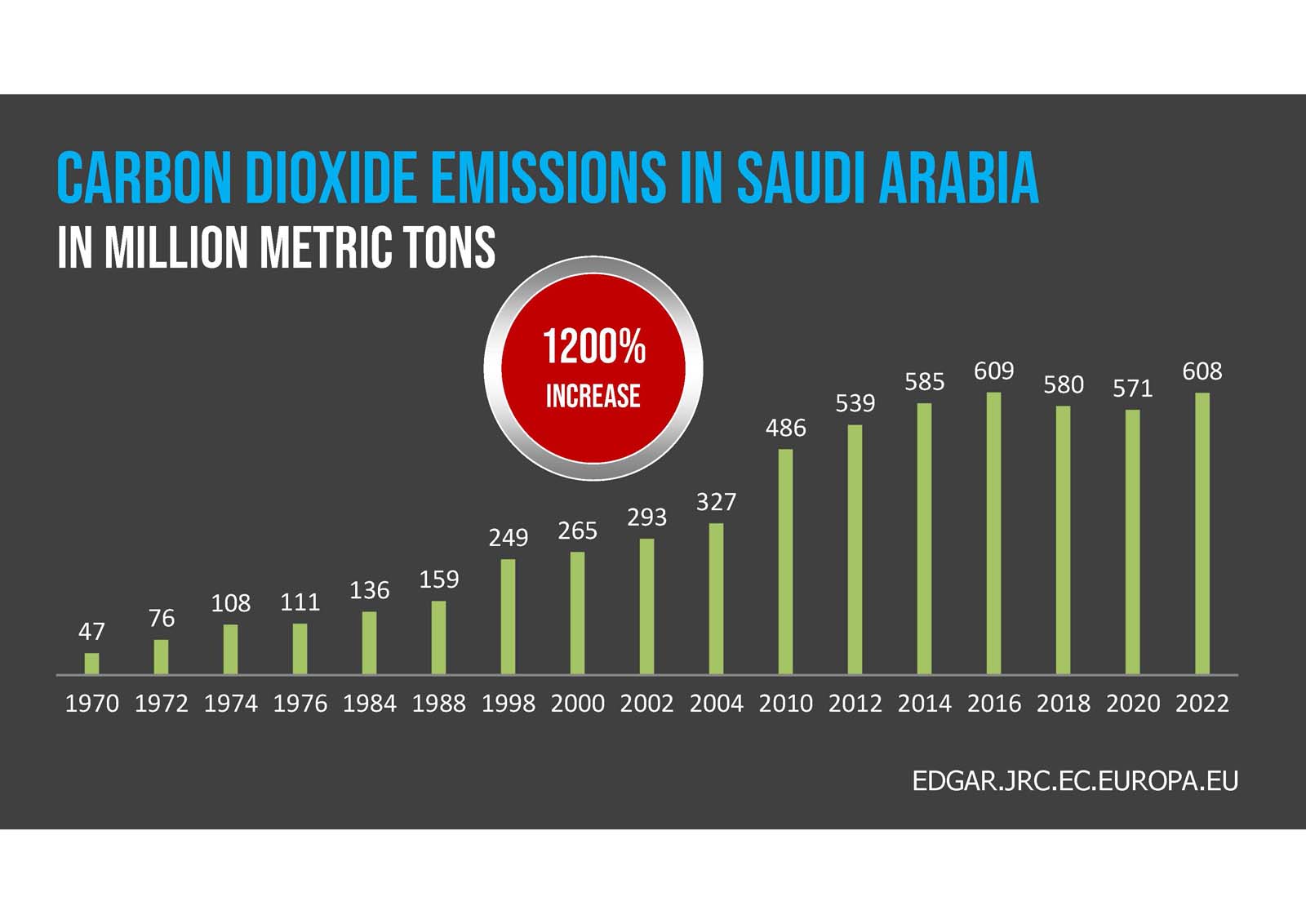
Bar graph showing a 1200% increase in carbon dioxide emissions in Saudi Arabia from 47 million metric tons in 1970 to 608 million metric tons in 2022.
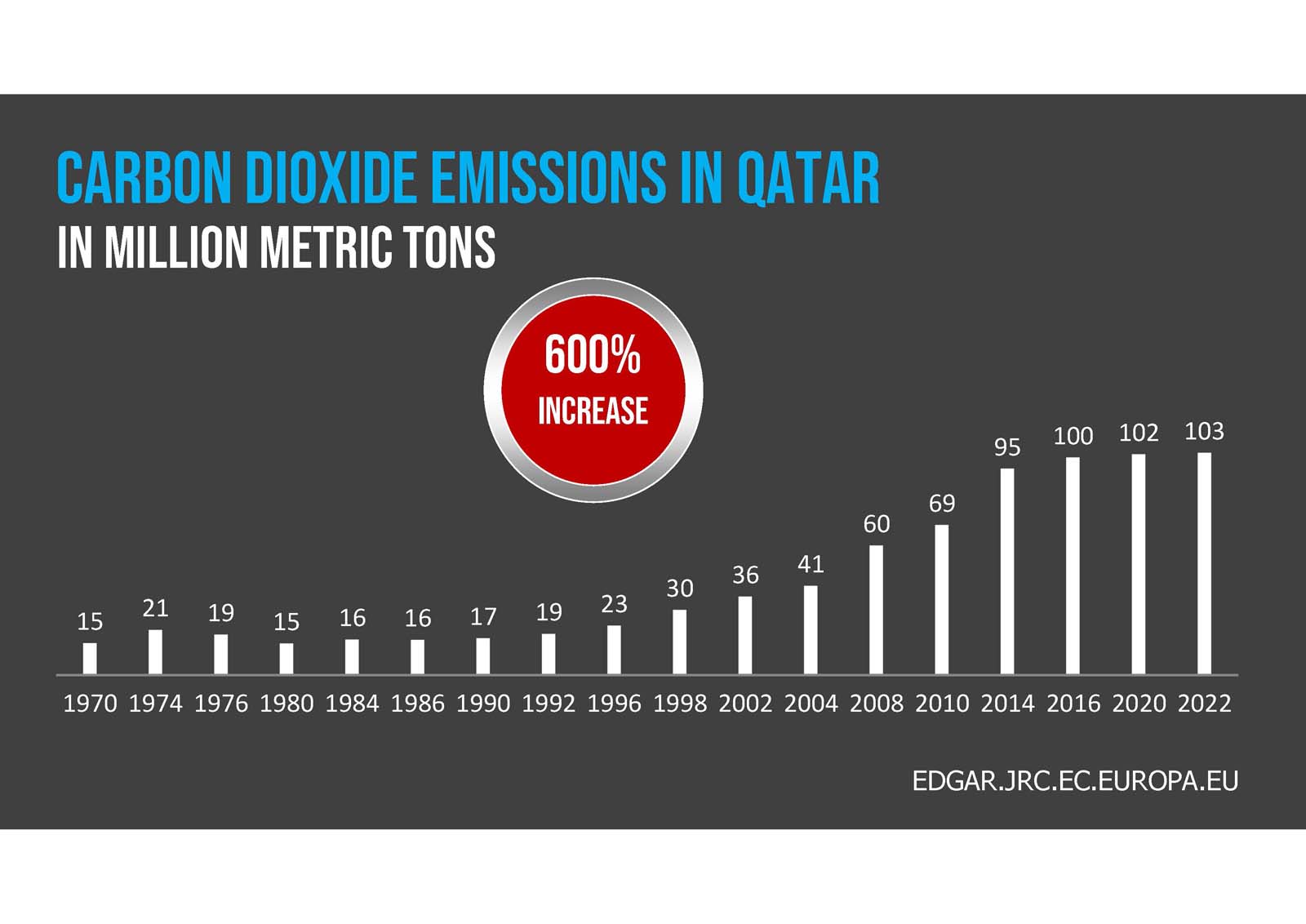
Bar chart showing Qatar’s carbon dioxide emissions rising from 15 million metric tons in 1970 to 103 million in 2022, representing a 600% increase. Source: EDGAR.JRC.EC.EUROPA.EU.
Text reads: "Carbon Dioxide Emissions Gulf Corporation Council GCC" on a dark gray background, with blue and white lettering.
S2ADesign.com logo with blue lightning bolt icon on a dark gray background.

error: Content is protected !!